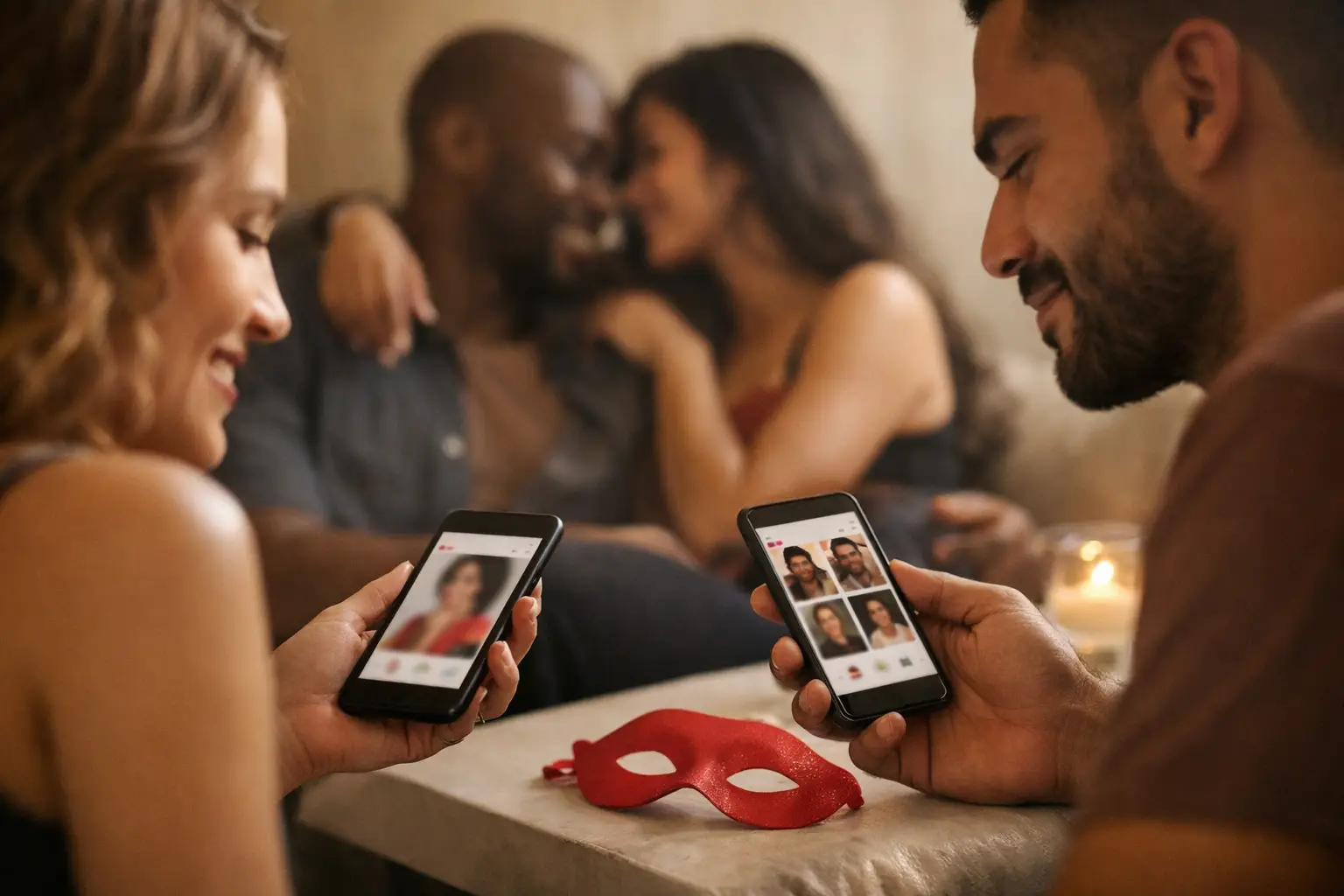
If you have ever tried finding the best dating app for open relationships on a mainstream platform, you already know the pattern. You spend time setting clear expectations, only to run into hidden intentions, fake profiles, or people who treat non-monogamy like a novelty instead of a real relationship structure. For adults who value discretion and honesty, the real question is not which app is most popular. It is which one is built to protect you while helping you meet the right people.
What makes the best dating app for open relationships?
For open relationships, the usual dating app standards are not enough. A clean interface and a large user base may sound appealing, but they do not solve the problems that matter most in this space. Privacy, verification, clear intent, and couple-friendly design carry more weight than raw scale.
That is because people exploring open relationships are often managing more than attraction alone. They are managing boundaries, communication, visibility, and risk. A platform that ignores those realities can create friction very quickly. One that accounts for them makes the experience feel more respectful from the start.
The best option usually does three things well. It helps users present themselves honestly, it gives them meaningful control over what others can see, and it reduces the chances of wasting time on fake or mismatched interactions.
Why mainstream dating apps often fall short
Mainstream apps are designed for the broadest possible audience. That makes them convenient, but not necessarily suitable for open relationships. Even when they add non-monogamy-friendly profile options, those features are often layered onto a system that still assumes one-on-one dating as the norm.
That gap shows up in practical ways. Couples struggle to represent themselves accurately. One partner may have to manage the entire account, which creates confusion and trust issues. Singles interested in lifestyle dynamics may find it hard to filter for people who actually understand open relationship etiquette. And many users still hesitate to be fully honest because their real-life identity feels too exposed.
There is also the issue of intent. On a generic app, people use the same space for long-term monogamy, casual dating, curiosity, and everything in between. That is not automatically bad, but it means expectations collide constantly. In open relationship dating, mismatched expectations are not a minor inconvenience. They can create discomfort, wasted effort, and avoidable privacy risks.
The features that matter most
When people ask for the best dating app for open relationships, they are often asking for the safest and most credible environment, even if they do not phrase it that way.
Verification is one of the clearest trust signals. In adult and non-monogamous spaces, fake profiles are more than annoying. They can undermine confidence in the entire platform. Identity checks, profile review systems, or other verification tools help separate serious members from people who are there to lurk, mislead, or waste time.
Privacy controls matter just as much. Many adults exploring open relationships are not looking to broadcast that part of their life to coworkers, neighbors, or casual acquaintances. Features like blurred photos, hidden identifiers, controlled visibility, and less precise location sharing are not optional extras. They are often the reason someone feels comfortable participating at all.
Couple functionality is another major divider between average apps and genuinely useful ones. If a platform expects couples to squeeze themselves into a single-user model, it is already creating a poor fit. Open relationship and lifestyle dating often involve shared decision-making, separate communication preferences, and mutual accountability. Couple-oriented accounts with separate logins are a strong sign that the product understands how these connections actually work.
Messaging tools also matter, but not in the usual sense of speed or novelty. What matters more is whether communication feels contained, private, and respectful. A serious adult platform should make it easier to have intentional conversations, not push users into chaotic attention competition.
Bigger is not always better
One common mistake is assuming the biggest app must be the best app. For open relationships, that logic often fails. A larger platform may give you more profiles to browse, but it can also bring more noise, more low-effort users, and more people who do not understand the space.
A smaller, better-moderated community can produce stronger results because the quality of interaction is higher. That is especially true when members join with a clear understanding of the platform's purpose. In adult and lifestyle dating, relevance often beats scale.
This is also where trust-first design makes a difference. A curated environment may initially feel narrower than a mainstream app, but it tends to save time. You spend less energy filtering out people who are careless, deceptive, or simply not aligned with what you want.
How couples and singles should evaluate a platform differently
The best fit depends partly on how you are using it.
For couples, account structure is one of the first things to look at. Can both partners participate clearly? Can each person communicate without creating confusion about who is speaking? Can the profile reflect shared boundaries and interests without flattening both people into a single voice? If the answer is no, the platform may create unnecessary tension before you even start meeting anyone.
For singles, the bigger concern is often legitimacy and context. Are you joining a space where couples and other singles are actually being direct about their expectations? Are there enough profile details and trust signals to help you distinguish curiosity from experience, and experience from bad faith? In open relationship environments, context helps everyone make better choices.
There is also a regional factor. In smaller markets or privacy-conscious communities, discretion becomes even more important. A platform that protects identity well may be more valuable than one with a larger but less secure audience.
The trade-off between visibility and discretion
Every adult dating platform makes choices about exposure. Some favor visibility because it drives activity. Others put more weight on user control. For open relationships, the second model is often the better one.
That does not mean maximum privacy is always perfect. More protection can sometimes mean slower discovery or fewer immediate matches. But for many adults, that is a fair trade. It is better to have fewer credible conversations than more risky ones.
This is especially true for users who are professionally visible, locally known, or simply selective about who gets access to their personal life. If an app treats privacy as a core feature rather than a marketing line, it tends to attract users with a similar mindset. That changes the tone of the community in a good way.
What a trust-first platform looks like in practice
A trust-first platform does not rely on excitement alone. It reduces uncertainty at every stage.
You should be able to tell that profile quality matters. You should see signs that the platform is trying to keep participation real. You should have tools that let you reveal information gradually instead of all at once. And if you are part of a couple, the structure should support that openly rather than forcing awkward workarounds.
This is where a specialized network like Aphrodite.is can make more sense than a general dating app. It is designed around the realities that matter in swinger and open relationship spaces: verified participation, privacy controls, couple-oriented accounts, and a more respectful environment for adults who want real connection without unnecessary exposure.
That does not mean every user needs the exact same platform. Some people prioritize local volume. Others care most about discretion. Others want a community that feels more intentional and less performative. But if you are comparing options seriously, trust features should sit near the top of the list, not at the bottom.
So which app is actually best?
The honest answer is that the best dating app for open relationships is the one that fits your level of openness, your privacy needs, and the kind of dynamic you want to build. There is no single winner for every person.
If you want the widest pool possible and are willing to sort through more noise, a mainstream app may still be part of your strategy. If you want a more credible adult environment where discretion, verification, and couple functionality are built into the experience, a specialized platform is usually the stronger choice.
That difference matters more than flashy branding or app store popularity. In open relationship dating, the best experience rarely comes from being seen by everyone. It comes from being seen by the right people, in the right setting, with the right level of control.
A good platform should make you feel more confident, not more exposed. Start there, and the right choice becomes much clearer.