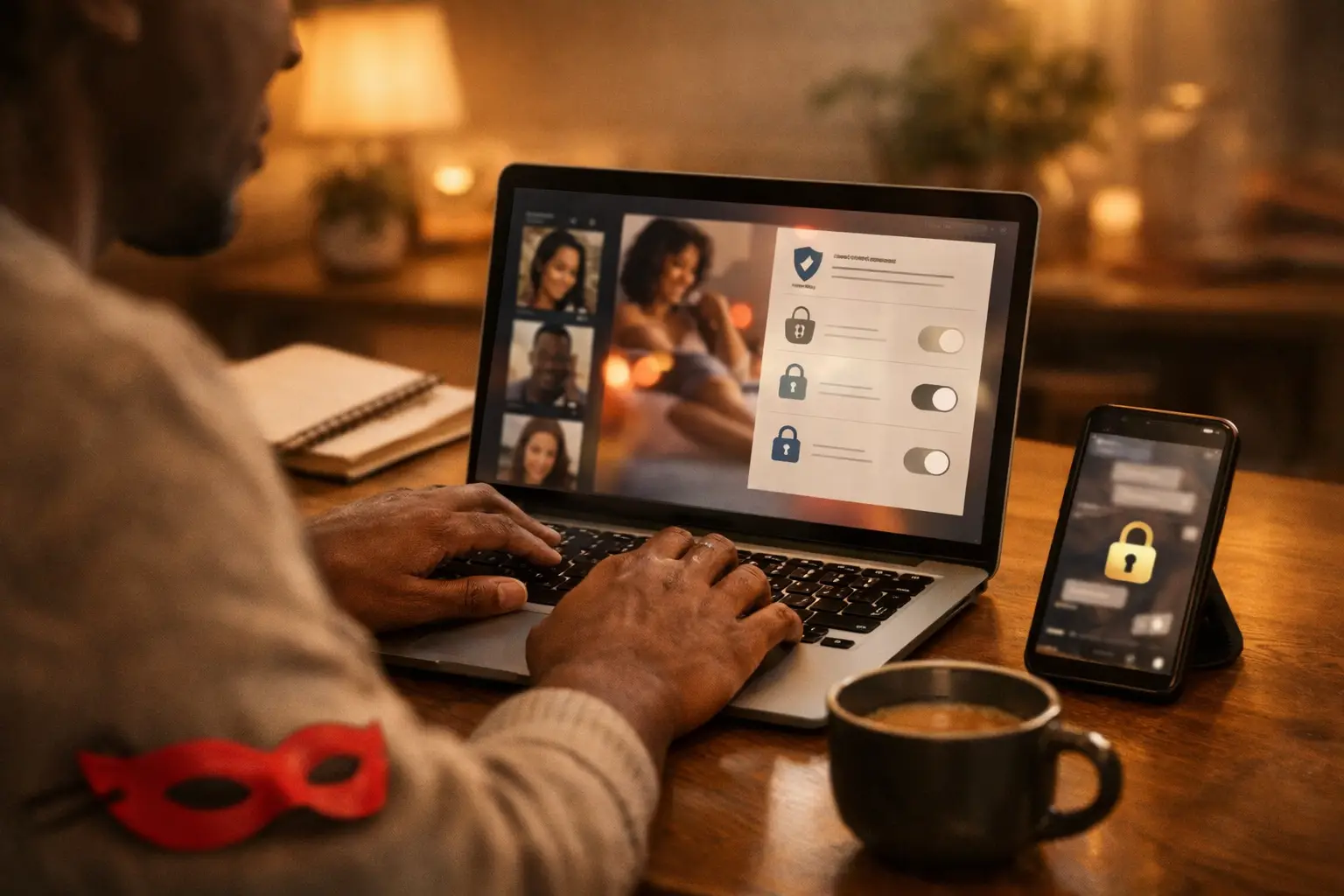
The moment you create a dating profile, you make a series of privacy decisions - whether you mean to or not. Your photos, your location, your writing style, even the app you choose can reveal more than you expect. If you want to learn how to date discreetly online, the goal is not to disappear. It is to stay in control of what you share, who sees it, and when.
For adults exploring swinging, open relationships, or more private forms of connection, that control matters even more. Mainstream apps often treat privacy as a setting buried three menus deep. A better approach is to start with discretion as your standard, not your backup plan.
How to date discreetly online starts with the platform
The easiest way to compromise your privacy is to use a platform that was not designed for discreet adult dating in the first place. Many general dating apps encourage public-facing profiles, broad location sharing, and fast visibility. That may work for casual users with little concern about exposure. It does not work as well for people managing professional reputations, family privacy, or community stigma.
A privacy-conscious platform should make a few things clear from the start. You should be able to control photo visibility, limit identifying details, and interact in an environment where verification reduces fake profiles. If a site makes you feel exposed before you even send a message, that is not a small issue. It is a sign that the product priorities may not match your needs.
This is especially relevant for couples. Discreet dating becomes harder when two people are trying to coordinate one account, one inbox, and one set of boundaries. Platforms with couple-friendly tools, including separate logins and shared profile management, tend to create fewer risks and fewer misunderstandings.
Build a profile that reveals intent, not identity
A discreet profile should be honest without being overly specific. That balance is where many people get stuck. They either write so little that they attract the wrong attention, or they share so much that they become easy to identify.
Start with what matters most to matching: your relationship dynamic, general interests, boundaries, and the kind of connection you are open to. Leave out details that narrow you down too quickly, such as your employer, exact neighborhood, children’s ages, specific gym, or any hobby that is unusually traceable in a small city.
Photos deserve extra care. A clear face photo can help with trust, but public visibility is not the only option. Blurred images, private galleries, or selective photo sharing often provide a better balance between authenticity and discretion. If a platform allows you to show photos only after mutual interest or verification, that is usually the smarter route.
It also helps to create separation between your dating identity and the rest of your digital life. Use a dedicated email address. Avoid usernames you have used on social platforms, gaming accounts, or professional forums. Small overlaps are often how anonymity breaks down.
Be precise about privacy settings
People often assume privacy is handled by the app. In reality, the default settings are not always the safest settings.
Before you actively use any platform, review every visibility control available. Check whether your profile appears in search engines, whether your distance is shown exactly or approximately, whether others can screenshot private photos, and whether your online status is visible. If location is displayed, broader is usually better. Approximate city-level visibility protects you far more than exact-distance readouts, especially in smaller communities.
Notification settings matter too. A discreet dating profile loses value fast if messages appear on a locked screen during work or at home. Turn off preview text, rename app notifications if possible, and use device-level privacy tools so no one can read incoming messages at a glance.
If you are part of a couple, align on these settings together. Shared expectations around visibility, photos, and response timing reduce stress. Discretion is not just technical. It is relational.
Verification is not a luxury feature
When people think about discreet dating, they often focus only on hiding from the wrong audience. Just as important is confirming the right audience is real.
Fake profiles, recycled photos, and unclear relationship status are common problems on low-trust platforms. That creates a strange contradiction: users feel pressure to reveal more of themselves just to confirm someone else is genuine. Verification helps solve that. When identity checks, couple verification, or profile review systems are in place, you do not have to trade as much privacy for basic confidence.
This is one reason niche adult communities tend to work better than broad free-for-all apps. A more curated environment does not guarantee perfect behavior, but it does reduce noise, impersonation, and time-wasting. Platforms like Aphrodite.is are built around that trust-first model, which matters when discretion and legitimacy need to exist together.
How to date discreetly online without sounding guarded
Some users become so focused on privacy that their messaging feels closed off or suspicious. That can make genuine people hesitate. Discreet does not need to mean distant.
A better approach is calm clarity. You can say that you prefer to exchange certain details after mutual comfort is established. You can explain that you do not share face photos publicly but are open to private sharing after a respectful conversation. Most experienced adults in the lifestyle understand this immediately, because they are managing similar concerns.
What builds trust is consistency. If your profile says you value privacy, your behavior should reflect that in a steady, respectful way. Answer questions clearly. State boundaries without apology. Do not pressure others to share what you would not share yourself.
The right match will usually respond well to that tone. The wrong match often reveals themselves by pushing too fast, asking for off-platform contact immediately, or demanding identifying details early on.
Move slowly when the stakes are higher
Not every connection requires the same pace. If you are single in a large city and using a tightly controlled profile, your risk profile may be different from a married professional in a smaller community. The more exposure could affect your work, family, or social life, the more deliberate you should be.
That means keeping early conversation on-platform, where moderation tools and reporting systems exist. It means avoiding immediate migration to personal phone numbers or personal social accounts. It means watching for pressure disguised as chemistry.
A useful rule is this: share in stages. First establish basic compatibility. Then confirm authenticity. Then exchange limited private details. A video verification step or a private photo exchange may make sense before any real-world meeting, but timing depends on the platform, the conversation, and your comfort level.
There is a trade-off here. Moving slowly can reduce momentum. Moving quickly can increase risk. Most adults who value discretion would rather lose a rushed match than create a lasting privacy problem.
Protect your real-world identity before meeting
Discreet online dating does not end when a conversation feels promising. The transition offline is where many people relax too early.
Before meeting, confirm that both sides are aligned on expectations, boundaries, and relationship context. For couples, that often means making sure both partners are visibly participating. If one person claims their partner is involved but never appears in messaging or verification, pause there.
Choose a first meeting setting that gives you control. Public but discreet works better than isolated and overly intimate. If privacy matters, you do not need to choose the busiest place in town, but you do want a setting where leaving is easy and pressure is low.
It is also worth thinking about data trails. Rideshare drop-offs at your home, shared personal calendars, and casual social follows can expose more than the date itself. A discreet approach is rarely about paranoia. It is about avoiding obvious points of exposure before trust has actually been earned.
Discretion works best when expectations are mutual
One of the biggest mistakes in adult dating is assuming everyone defines privacy the same way. Some people are comfortable with face photos right away. Others are not. Some couples are fully out to friends. Others keep their lifestyle completely separate from daily life.
The cleanest way to avoid friction is to say what discretion means to you. Maybe it means no face photos until after verification. Maybe it means no discussion of work or family details early on. Maybe it means all communication stays on-platform until a meeting is confirmed. Clear expectations reduce confusion and protect everyone involved.
That kind of maturity tends to attract the right people. Serious users are usually relieved to meet someone who communicates with care. Discretion, handled well, signals self-respect, respect for partners, and respect for the community.
If you want to date privately online, do not think of discretion as a wall. Think of it as structure. The right structure gives you room to explore with more confidence, more clarity, and far less unnecessary risk.